STOIC PRACTICE: COGNITIVE RESILIENCE
How auditing your impressions turns ancient Stoicism into durable mental resilience
01 Oct 2026
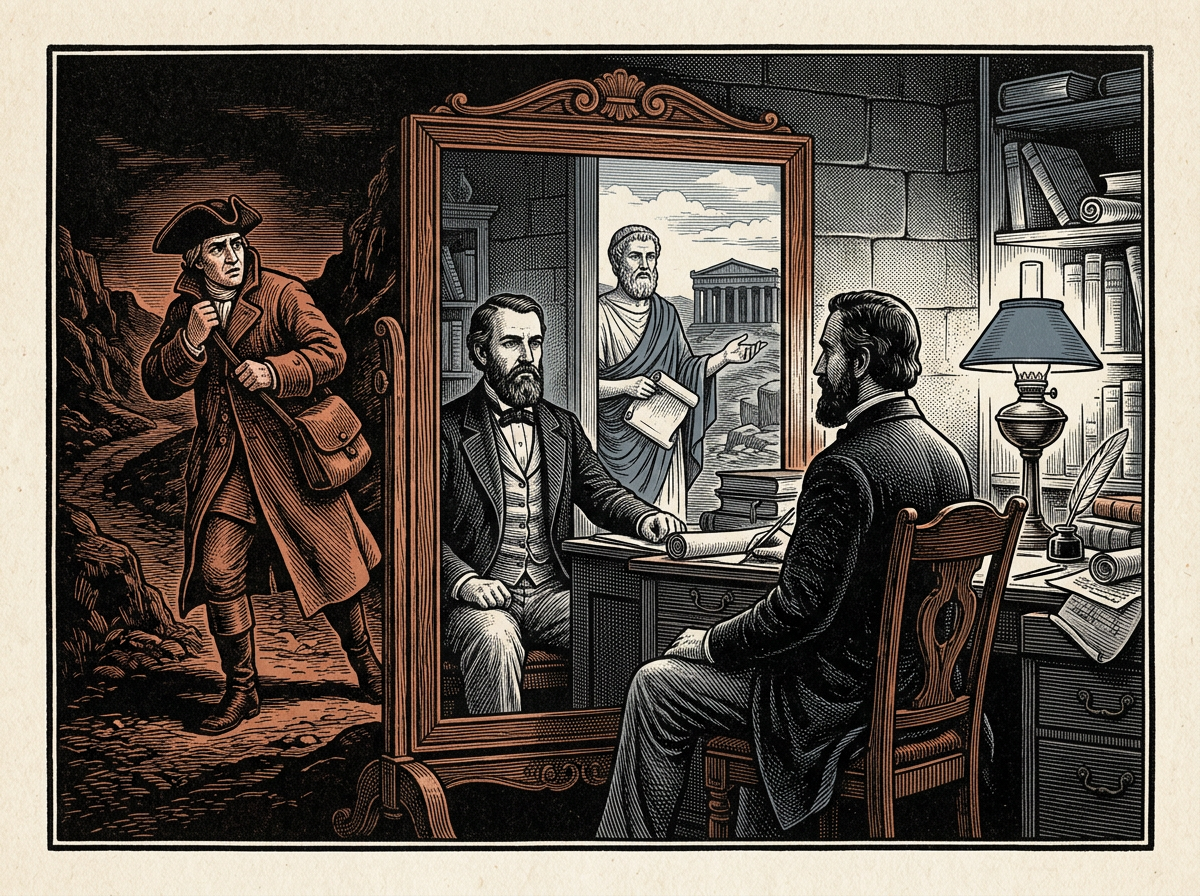
The Seeker and the Sage: Epistemological Quests and Eudaimonic Realization in Classical Stoicism
Academic Abstract & Executive Overview
The dialectical tension between the inquisitive seeker and the internalized sage constitutes a foundational dynamic within Hellenistic Stoic epistemology. This paper examines the cognitive mechanisms through which an individual transitions from abstract philosophical inquiry to the operational mastery of virtue ethics and psychological resilience. Grounded in classical texts including Epictetus, Seneca, and Marcus Aurelius, alongside contemporary therapeutic scholarship, this analysis maps the journey of the seeker. The seeker is characterized by epistemic anxiety and a reliance on external validation. In contrast, the sage represents the idealized realization of unassailable mental clarity, or ataraxia. By employing a rigorous methodology involving cognitive appraisals, dialectical journaling, and eudaimonic integration, contemporary practitioners can operationalize ancient philosophical frameworks. Empirical observations from cognitive behavioral research support the efficacy of these classical interventions in reducing psychological distress, fostering emotional regulation, and establishing enduring eudaimonic well-being across diverse clinical and educational settings.
Theoretical Background & Literature Framework
The philosophical architecture of classical Stoicism is fundamentally an epistemology of perception, valuation, and psychological integration. As Pierre Hadot observed in his seminal work The Inner Citadel, ancient philosophy was not merely an academic exercise in abstract logic, but a comprehensive ars vitae, or art of living, designed to heal the soul from psychological turmoil (Hadot, 1998). Within this therapeutic tradition, the seeker emerges as an individual caught in the web of unexamined impressions. According to Epictetus in his Discourses, human suffering does not stem from external events themselves, but from the judgments (dogmata) that individuals attach to those events (Epictetus, c. 108/1925). This foundational insight anticipates modern cognitive behavioral therapy, wherein Aaron Beck and Albert Ellis independently rediscovered that cognitive distortions drive emotional pathology (Beck, 1979; Ellis, 1994).
The transition from the seeker to the sage requires an explicit understanding of the dichotomy of control, a principle that divides all worldly phenomena into things up to us (eph hemin) and things not up to us (ouk eph hemin). As Martha Nussbaum argues in The Therapy of Desire, Hellenistic philosophy operates as a form of medical intervention for the human psyche, addressing passions such as fear, greed, and grief through rigorous dialectical reframing (Nussbaum, 1994). The seeker struggles with this dichotomy, constantly investing psychological capital in external outcomes such as wealth, reputation, and health. The sage, conversely, internalizes the locus of evaluation entirely within the rational faculty, or hegemonikon, aligning personal volition (prohairesis) with the rational order of nature (Long, 1996).
From a neurobiological perspective, the psychological shift from the reactive seeker to the reflective sage parallels the dampening of amygdala-driven threat responses and the strengthening of prefrontal cortical inhibition. Research in neuroplasticity indicates that sustained metacognitive reflection and cognitive reappraisal structurally alter neural pathways associated with emotional regulation and impulse control (Davidson & McEwen, 2012). Seneca, writing in his Letters from a Stoic, repeatedly emphasizes the necessity of daily moral accounting and the conscious internal dialogue required to transform intellectual assent into habitual virtue (Seneca, c. 65/1969). Thus, the seeker and the sage are not merely static archetypes from antiquity, but active, dynamic phases of human consciousness striving for eudaimonic realization through disciplined introspection.
Methodological Application & Practical Recommendations
To operationalize the theoretical principles of classical Stoicism, practitioners must implement a structured, tripartite methodology designed to bridge the gap between abstract philosophical inquiry and daily behavioral execution.
STEP 01: Epistemological Audit
The first operational phase requires the seeker to conduct a daily assessment of internal judgments using the Stoic dichotomy of control. This process involves intercepting immediate emotional reactions before they consolidate into destructive passions. When an external stimulus induces anxiety, anger, or frustration, the practitioner must pause and execute an epistemological audit. This requires writing down the triggering event and explicitly separating raw empirical reality from subjective cognitive appraisal. For example, if a professional setback occurs, the seeker must categorize the loss of a contract as an external event outside of direct personal control, while categorizing their own work ethic, integrity, and future preparation as internal variables entirely within their control. By systematically dismantling irrational beliefs through this forensic cognitive examination, the practitioner reduces emotional reactivity and trains the mind to evaluate impressions with objective precision.
STEP 02: Dialectical Journaling
Following the epistemological audit, the practitioner must implement a structured reflective practice modeled after the personal notebooks of Marcus Aurelius, known to posterity as the Meditations (Aurelius, c. 180/2003). Dialectical journaling transcends simple diary writing; it functions as an adversarial internal dialogue where the seeker interrogates their own motives, rationalizations, and emotional attachments. At the conclusion of each day, the practitioner addresses three core inquiries to the self: What did I do well today in accordance with virtue? Where did I fall short or yield to external impressions? How can I correct this misapprehension tomorrow? This writing ritual forces the abstract ideals of wisdom, courage, justice, and temperance into immediate contact with concrete behavioral responses. Through consistent journaling, the seeker develops heightened metacognitive awareness, gradually aligning their automatic behavioral habits with the reasoned disposition of the sage.
STEP 03: Eudaimonic Integration
The final phase of development bridges intellectual understanding and behavioral habituation by establishing operational routines that prioritize character development over external validation. Eudaimonic integration demands a deliberate restructuring of life goals away from hedonic pursuits and toward the active cultivation of virtue. Practitioners must design daily routines that test and strengthen moral resolve, such as voluntarily embracing mild discomfort, withholding hasty judgments in interpersonal conflicts, and dedicating time to community welfare without expecting reciprocity. By consistently choosing the hard path of integrity over the easy path of social appeasement, the seeker internalizes the psychological stability of the sage. This integration culminates in an unshakeable sense of internal equilibrium, where self-worth is entirely decoupled from fluctuating external circumstances and firmly anchored in rational moral excellence.
Key Empirical Takeaways
- Epistemic framing directly modulates emotional regulation; separating objective environmental inputs from subjective cognitive evaluations significantly reduces psychological distress and anxiety (Beck, 1979).
- The classical Stoic dichotomy of control aligns closely with contemporary locus of control frameworks in psychology, demonstrating that internalizing responsibility for personal volition fosters long-term psychological resilience (Rotter, 1966).
- Structured reflective practices, such as evening journaling and moral accounting, enhance metacognitive awareness and facilitate the behavioral habituation of ethical principles (Hadot, 1998).
- Neuroplasticity research indicates that consistent cognitive reappraisal and mindfulness-based interventions structurally strengthen prefrontal cortical pathways, mirroring the ancient Stoic cultivation of the hegemonikon (Davidson & McEwen, 2012).
- Eudaimonic well-being, achieved through the prioritization of virtue and character development over hedonic pursuits, correlates with higher life satisfaction and lower rates of depressive symptomatology (Ryan & Deci, 2001).
References & Further Reading
- Aurelius, M. (2003). Meditations (M. Hammond, Trans.). Penguin Books. (Original work published c. 180 CE)
- Beck, A. T. (1979). Cognitive therapy of depression. Guilford Press.
- Davidson, R. J., & McEwen, B. S. (2012). Social influences on neuroplasticity: Stress and interventions to promote well-being. Nature Neuroscience, 15(5), 689-695.
- Epictetus. (1925). The discourses as reported by Arrian, the manual, and fragments (W. A. Oldfather, Trans.). Harvard University Press. (Original work published c. 108 CE)
- Hadot, P. (1998). The inner citadel: The Meditations of Marcus Aurelius (M. Chase, Trans.). Harvard University Press.
- Nussbaum, M. C. (1994). The therapy of desire: Theory and practice in Hellenistic ethics. Princeton University Press.
- Seneca, L. A. (1969). Letters from a stoic (R. Campbell, Trans.). Penguin Books. (Original work published c. 65 CE)
---
SOCIAL MEDIA SNIPPETS (For Distribution)
LinkedIn Thought Leadership Post
The journey from an anxious seeker to an internalized sage requires more than passive philosophical reading. It demands daily operational discipline. By utilizing classical Stoic frameworks, modern professionals can radically enhance their psychological resilience and leadership capacity.
Key insights from our latest research include:
- Separating objective reality from subjective cognitive appraisals to reduce stress and emotional reactivity.
- Implementing structured dialectical journaling to bridge abstract ethical theory with concrete daily behaviors.
- Prioritizing character development and internal volition over volatile external validation.
Read the full academic analysis on Chaff & Wheat to transform your approach to cognitive resilience.
#Philosophy #Psychology #Leadership #Research
X (Twitter) Post
Are you an anxious seeker or an internalized sage? Discover how classical Stoic epistemology and modern cognitive behavioral science intersect to build unshakeable psychological resilience. Read the full research paper on Chaff & Wheat today.
Newsletter Teaser
Explore the dialectical tension between the inquisitive seeker and the internalized sage in our latest academic paper examining classical Stoic epistemology and eudaimonic realization. Discover how structured cognitive audits and dialectical journaling can permanently transform your psychological resilience.
Related dispatches
CORE VALUE: COGNITIVE RESTRUCTURING · The Bend Index
Stripping mysticism from prosperity texts reveals useful tools for cognitive restructuring.
01 Oct 2026
FALSE TRAP: RIGID AUTHENTICITY · The Bend Index
Do not mistake the discomfort of growth for professional fraudulence.
28 Sept 2026
MENTAL RESTRUCTURING: PROSPERITY LITERATURE · The Bend Index
How classic prosperity literature functions as early cognitive science
28 Sept 2026
CORE DILEMMA: ABSTRACT PERFECTION · The Bend Index
The unreachable Stoic sage works best as an internal compass
28 Sept 2026