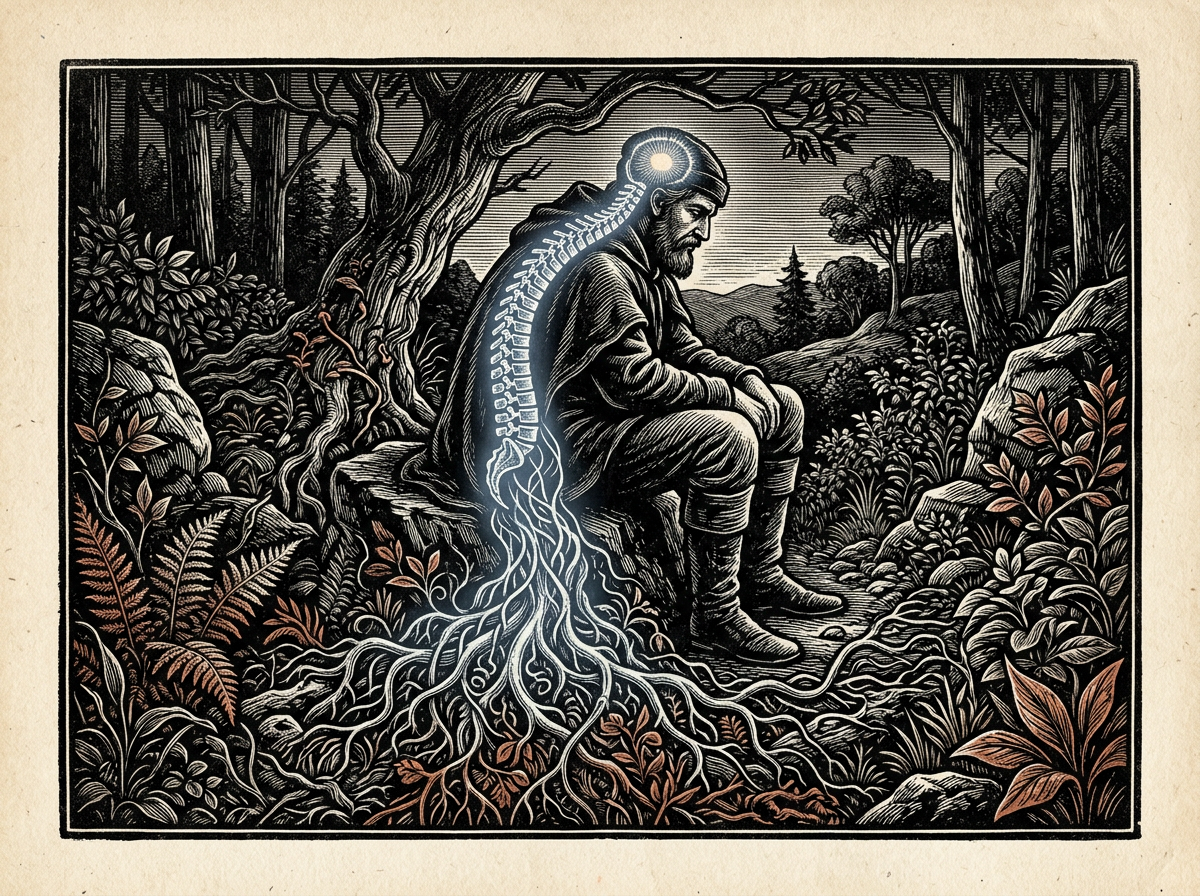
THERAPEUTIC FRAMEWORK: SOMATIC RECOVERY
Healing complex trauma requires grounding the body before rewriting the mind.
20 Sept 2026
Integrating Somatic and Cognitive Modalities in Complex Trauma Recovery: A Mind-Body Framework
Academic Abstract & Executive Overview
Complex post-traumatic stress disorder (C-PTSD) manifests through profound dysregulation of both neurobiological and psychological systems, necessitating interventions that bridge somatic experiencing with traditional cognitive restructuring. Unlike single-incident post-traumatic stress disorder, complex trauma typically stems from chronic, inescapable interpersonal victimization during formative developmental periods, resulting in pervasive alterations in affect regulation, self-concept, and relational capacity. Effective recovery protocols must systematically address autonomic nervous system stabilization to facilitate long-term emotional integration and self-coherence. This paper examines the theoretical architecture underlying mind-body workbooks designed for complex trauma recovery, synthesizing neurobiological perspectives with empirical clinical data. By evaluating the structural mechanics of bottom-up somatic interventions alongside top-down cognitive processing, we delineate a comprehensive roadmap for treating chronic trauma sequelae. The integration of interoceptive awareness, affect regulation, and narrative reconstruction provides clinicians and survivors with a replicable methodology for navigating the multi-layered architecture of complex trauma, ultimately moving the clinical paradigm from mere symptom reduction toward holistic functional restoration and post-traumatic growth.
Theoretical Background & Literature Framework
The conceptualization of complex post-traumatic stress disorder has undergone significant evolution since its foundational introduction into clinical literature by Judith Herman in her landmark text Trauma and Recovery: The Aftermath of Violence - from Domestic Abuse to Political Terror (1992). Herman argued that prolonged, repeated trauma within captivity-like environments, such as domestic abuse, childhood maltreatment, or institutional confinement, produces a distinct clinical syndrome that surpasses the symptom parameters of conventional post-traumatic stress disorder. This expanded diagnostic understanding was subsequently codified across international classifications, culminating in its formal adoption within the World Health Organization International Classification of Diseases (ICD-11). The syndrome is characterized not only by classic intrusion, avoidance, and hyperarousal symptoms, but also by severe, pervasive disturbances in emotional regulation, persistent beliefs about oneself as diminished or worthless, and sustained difficulties in sustaining interpersonal relationships.
To understand the maintenance of these symptoms, researchers must examine the neurobiological architecture of trauma, as detailed by Bessel van der Kolk in The Body Keeps the Score: Brain, Mind, and Body in the Healing of Trauma (2014). Van der Kolk's empirical observations demonstrate that chronic trauma structurally and functionally alters the human brain, specifically impacting the amygdala, the medial prefrontal cortex, and the hippocampus. The amygdala, functioning as the brain's primary smoke detector, becomes chronically hyperactive, interpreting ambiguous internal or external cues as existential threats. Simultaneously, the medial prefrontal cortex, responsible for executive functioning, impulse control, and reality testing, exhibits functional downregulation, leaving individuals incapable of logically assessing safety in the present moment. Furthermore, trauma-induced hippocampal shrinkage impairs contextual memory processing, trapping the survivor in a perpetual somatic re-experiencing of the past where chronological time collapses and physiological survival responses remain permanently activated.
Complementing this neurobiological perspective, attachment theory provides a crucial framework for understanding the interpersonal dimensions of complex trauma. As established through longitudinal developmental research, secure attachment figures serve as external regulators for the infant and child nervous system, a process known as co-regulation. When primary caregivers are themselves the source of terror or neglect, the developing child experiences a biological paradox: the instinctual drive to seek safety compels the child toward the caregiver, yet that same caregiver represents the source of mortal danger. This dynamic gives rise to disorganized attachment patterns, which manifest in adulthood as chronic hypervigilance, profound shame, and structural dissociation of the personality. According to structural dissociation theory, individuals with complex trauma partition their psychological experiences into seemingly normal parts that manage daily functioning and emotional parts that remain fixated in defensive activation states such as fight, flight, freeze, or submit (van der Hart et al., 2006).
Addressing these deeply entrenched physiological and psychological adaptations requires moving beyond traditional talk therapy. Talk-based modalities that rely exclusively on top-down cognitive processing often prove insufficient because chronic trauma compromises Broca's area and other language centers during high-arousal states, rendering the experience literally unspeakable. Consequently, somatic interventions pioneered by researchers such as Peter A. Levine in Waking the Tiger: Healing Trauma (1997) emphasize bottom-up processing. Levine's somatic experiencing model posits that trauma is not merely an event in the past, but a physical energy residue trapped within the autonomic nervous system. By teaching individuals to track subtle bodily sensations and discharge pent-up survival energy through physiological completion cycles, somatic frameworks allow the nervous system to regain homeostatic balance. Comprehensive healing models must therefore integrate these somatic awareness techniques with cognitive narrative reconstruction, creating a dual-awareness state where the survivor can simultaneously experience bodily sensations and maintain cognitive contact with the present safety of the room.
Methodological Application & Practical Recommendations
STEP 01: Somatic Awareness and Interoception
The first methodological imperative in recovering from complex trauma involves cultivating somatic awareness and restoring interoceptive capacity. Chronic trauma survivors routinely disconnect from their physical forms as a protective defense against overwhelming somatic sensations, manifesting clinically as depersonalization, numbness, or chronic somatization. To reverse this protective alienation, practitioners and workbook methodologies must implement daily body-scanning practices designed to map physical sensations associated with triggers without triggering alarm responses.
To execute this intervention systematically, individuals are instructed to set aside dedicated time in a controlled, safe environment to direct their attention sequentially across different anatomical regions, starting from the feet and progressing upward toward the crown of the head. During this scanning process, the individual notes neutral, pleasant, or uncomfortable sensations without attempting to immediately alter or eliminate them. For instance, if an individual detects constriction in the chest or tightness in the jaw upon recalling a stressful interpersonal interaction, they are guided to anchor their awareness in that sensation while simultaneously noticing adjacent neutral areas, such as the contact points of the body against a chair or the rhythm of the breath.
This practice enhances autonomic self-regulation by incrementally expanding the window of tolerance, a construct denoting the zone of arousal within which an individual can function effectively. By incrementally exposing the nervous system to manageable doses of internal bodily data, the survivor re-establishes neural pathways between the insula, which processes interoceptive signals, and the prefrontal cortex. This reconnection enables the individual to interpret somatic sensations as transient physiological events rather than catastrophic emergencies, thereby reducing the frequency and intensity of trauma-induced panic cycles.
STEP 02: Affect Regulation and Distress Tolerance
Once baseline somatic awareness is established, the recovery protocol must transition to affect regulation and distress tolerance, utilizing bottom-up grounding techniques to manage hyperarousal and dissociation before any deep cognitive processing of traumatic memories can occur. When an individual is trapped in hyperarousal or acute dissociation, the prefrontal cortex is effectively taken offline, making insight-oriented psychotherapy ineffective or counterproductive. Therefore, immediate physiological stabilization must precede analytical exploration.
Practical implementation of this stage relies on somatic and sensorimotor grounding exercises that engage the parasympathetic nervous system through the vagus nerve. Rhythmic, diaphragmatic breathing exercises, such as box breathing or physiological sighs, immediately signal safety to the brainstem by lengthening exhalation relative to inhalation. In parallel, bilateral stimulation techniques, derived from Eye Movement Desensitization and Reprocessing methodologies, can be integrated into self-guided workbook frameworks. These techniques involve alternating tactile tapping on opposite shoulders, tracking lateral visual movements, or engaging in alternating auditory tones.
These interventions promote interhemispheric communication and tax working memory capacity, effectively dampening the hyper-reactivity of the amygdala. Furthermore, orienting exercises, such as actively scanning the immediate environment, naming five visible objects, describing their textures, and consciously registering that the current time and space are safe, anchor the wandering, traumatized mind in present reality. By systematically deploying these stabilization tools whenever emotional distress escalates past functional thresholds, survivors build robust distress tolerance, ensuring they possess the internal resources required to metabolize distress without resorting to maladaptive coping mechanisms such as self-harm, substance use, or chronic dissociation.
STEP 03: Narrative Reconstruction and Integration
The final phase of complex trauma recovery involves narrative reconstruction and integration, where survivors synthesize fragmented trauma memories into a cohesive personal history, thereby fostering post-traumatic growth and identity unification. In the wake of complex trauma, memory storage is frequently impaired; traumatic episodes are encoded not as coherent autobiographical narratives with a clear beginning, middle, and end, but as disjointed sensory fragments, somatic flashbacks, and emotional affective storms.
To address this fragmentation, expressive writing exercises and structured workbook prompts guide the individual through a controlled, titrated articulation of their life history. This process must be approached with extreme caution, ensuring that the survivor never plunges into retraumatization by attempting to process too much material simultaneously. The survivor begins by documenting safe, positive biographical markers, gradually incorporating neutral historical periods before approaching the traumatic incidents from a dual-awareness stance.
Writing exercises are structured to encourage the separation of the historical victim from the present survivor, utilizing third-person narrative techniques or creative expression to externalize the trauma. For example, an individual might write an account of a past developmental crisis while consciously grounding their feet on the floor and noting their current adult age, resources, and safety status. This methodology allows the hippocampus and prefrontal cortex to contextualize the traumatic memories, filing them away as historical events that occurred in the past rather than ongoing existential threats.
As these disparate emotional and cognitive fragments are woven into a unified autobiographical narrative, the survivor reclaims ownership over their identity. The internalized shame and self-blame that frequently accompany complex trauma are systematically dismantled, replaced by a coherent, integrated sense of self that acknowledges past victimization while anchoring firmly in present autonomy, resilience, and post-traumatic transformation.
Key Empirical Takeaways
- Complex post-traumatic stress disorder (C-PTSD) arises from chronic, inescapable interpersonal trauma and involves profound neurobiological alterations, specifically hyperactivation of the amygdala and functional downregulation of the medial prefrontal cortex.
- Top-down cognitive therapies alone are frequently insufficient for complex trauma recovery because high-arousal states impair Broca's area and language processing centers, necessitating bottom-up somatic interventions.
- Cultivating interoceptive awareness and mapping physical sensations through structured body-scanning practices helps expand the window of tolerance and enhances autonomic self-regulation.
- Bottom-up grounding techniques, including rhythmic diaphragmatic breathing and bilateral stimulation, successfully mitigate hyperarousal and dissociation, allowing individuals to stabilize prior to narrative exploration.
- Narrative reconstruction through titrated expressive writing synthesizes fragmented trauma memories into a cohesive autobiographical history, promoting identity integration and post-traumatic growth.
References & Further Reading
- Herman, J. (1992). Trauma and recovery: The aftermath of violence - from domestic abuse to political terror. Basic Books.
- Levine, P. A. (1997). Waking the tiger: Healing trauma. North Atlantic Books.
- van der Hart, O., Nijenhuis, E. R. S., & Steele, K. (2006). The haunted self: Structural dissociation and the treatment of chronic traumatization. W. W. Norton & Company.
- van der Kolk, B. (2014). The body keeps the score: Brain, mind, and body in the healing of trauma. Penguin Books.
- World Health Organization. (2018). International classification of diseases for mortality and morbidity statistics (11th revision). https://icd.who.int/
---
SOCIAL MEDIA SNIPPETS (For Distribution)
LinkedIn Thought Leadership Post
Complex trauma requires an integrated clinical approach that bridges somatic experiencing with cognitive restructuring. Traditional talk therapy alone often falls short because chronic trauma compromises language centers during high-arousal states. Recovery demands a systematic framework that restores autonomic stability and integrates mind and body.
- Implement daily body-scanning practices to map physical sensations, enhancing autonomic self-regulation and reconnecting with disowned bodily states.
- Utilize bottom-up grounding techniques, such as rhythmic breathing and bilateral stimulation, to manage hyperarousal and dissociation prior to cognitive processing.
- Employ structured workbook exercises to synthesize fragmented trauma narratives into a cohesive personal history, fostering identity integration.
#Psychology #MentalHealth #Research #TraumaRecovery #Neuroscience
X (Twitter) Post
Talk therapy alone cannot heal complex trauma. True recovery requires bridging somatic awareness with cognitive processing to stabilize the nervous system and integrate fragmented memories. Explore our latest academic framework on C-PTSD healing.
Newsletter Teaser
Discover how integrating somatic awareness with cognitive restructuring provides a comprehensive roadmap for healing complex post-traumatic stress disorder. Read our latest deep dive into the neurobiology of trauma recovery.
Related dispatches
FALSE TRAP: RIGID AUTHENTICITY · The Bend Index
Do not mistake the discomfort of growth for professional fraudulence.
28 Sept 2026
MENTAL RESTRUCTURING: PROSPERITY LITERATURE · The Bend Index
How classic prosperity literature functions as early cognitive science
28 Sept 2026
CORE DILEMMA: ABSTRACT PERFECTION · The Bend Index
The unreachable Stoic sage works best as an internal compass
28 Sept 2026
PHYSIOLOGICAL PRIORITY: TRAUMA RECOVERY · The Bend Index
Soothe the body before you rewrite the mind's trauma narrative.
28 Sept 2026