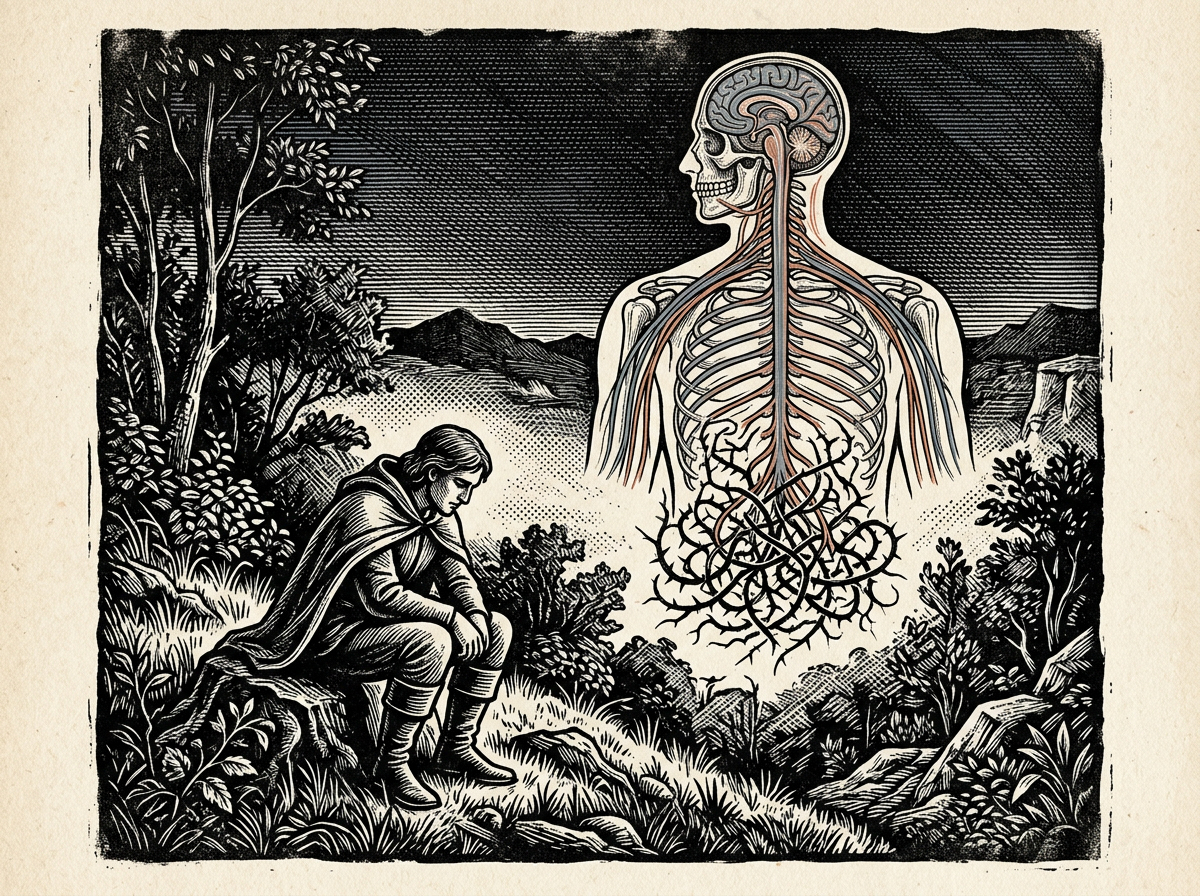
CLINICAL BLINDSPOT: UNINTEGRATED SOMATICS
Healing complex trauma requires grounding the body before rewriting the mind
18 Sept 2026
Integrating Somatic and Cognitive Modalities in Complex Trauma Recovery: A Mind-Body Framework
Academic Abstract & Executive Overview
Complex post-traumatic stress disorder (C-PTSD) represents a severe psychological condition characterized by profound dysregulation across neurobiological, affective, and relational domains. Unlike traditional post-traumatic stress disorder, which often arises from discrete, single-incident stressors, C-PTSD typically develops in the wake of chronic, prolonged, and inescapable interpersonal trauma, such as childhood abuse, domestic captivity, or sustained structural violence. As established in contemporary clinical literature, this condition manifests through persistent difficulties in emotional regulation, severe alterations in self-perception, and chronic interpersonal dysfunction. Because these traumatic experiences are encoded not only in semantic memory networks but also implicitly within the somatic architecture of the autonomic nervous system, clinical interventions must transcend standard talk therapy. Effective recovery frameworks require a dual-action approach that systematically bridges somatic experiencing with cognitive restructuring. This paper examines the theoretical foundations of mind-body integration in trauma recovery, analyzes the neurobiological mechanisms underpinning autonomic dysregulation, and outlines an empirical roadmap for stabilizing physiological arousal before attempting narrative reconstruction. By synthesizing insights from attachment theory, neurobiology, and structured workbook methodologies, this analysis demonstrates that long-term recovery depends upon restoring interoceptive awareness, stabilizing the autonomic nervous system, and reconstructing a coherent personal narrative.
Theoretical Background & Literature Framework
The theoretical foundation of complex trauma recovery rests upon an interdisciplinary convergence of attachment theory, modern affective neuroscience, and cognitive-behavioral principles. Historically, psychoanalytic and cognitive models dominated trauma treatment, prioritizing top-down cognitive restructuring to alter maladaptive schemas and dysfunctional core beliefs. However, clinical observations of survivors with developmental trauma revealed that pure cognitive interventions frequently fail because the subcortical regions of the brain, specifically the amygdala and the brainstem, remain trapped in chronic states of hyperarousal or defensive shutdown. As illuminated by foundational research from Judith Herman in Trauma and Recovery: The Aftermath of Violence - from Domestic Abuse to Personal Terror, recovery from chronic interpersonal trauma necessitates a three-stage model: establishing safety, reconstructing the trauma narrative, and reconnecting with ordinary life. Herman emphasized that safety cannot be achieved through cognitive insight alone, but must be grounded in physical stabilization and relational safety.
Expanding upon this foundation, Bessel van der Kolk demonstrated in The Body Keeps the Score: Brain, Mind, and Body in the Healing of Trauma that traumatic stress fundamentally alters the physical structure and functional connectivity of the human brain. Neuroimaging studies cited within van der Kolk's work indicate that during traumatic reactivation, the medial prefrontal cortex, which governs executive function and temporal orientation, experiences functional downregulation, while the limbic system undergoes hyperactivation. This neurobiological shift prevents individuals from processing traumatic events as historical occurrences, forcing them to experience past terror as ongoing physiological reality. Consequently, sensory fragments, visceral sensations, and motor impulses remain unintegrated, locked within somatic memory systems.
Complementing this neurobiological perspective, Peter A. Levine introduced the somatic experiencing model in Waking the Tiger: Healing Trauma, positing that trauma is fundamentally a biological incomplete response to threat. Levine argued that animals in the wild naturally discharge high levels of autonomic arousal through physical shaking, trembling, and orienting movements, whereas human socialization often inhibits these vital discharge mechanisms. When survival energy becomes chronically trapped within the autonomic nervous system, it manifests as somatic symptoms, chronic pain, and hyperarousal. Therefore, integrating somatic modalities with cognitive processing creates a comprehensive framework for healing. Cognitive behavioral therapy and dialectical behavior therapy provide the necessary tools for affect regulation, distress tolerance, and cognitive reframing, while somatic therapies restore interoceptive awareness and discharge bound survival energy, allowing the mind and body to return to baseline homeostasis.
Methodological Application & Practical Recommendations
Translating theoretical insights into clinical practice requires a structured, phase-oriented methodology that honors the physiological realities of complex trauma. The recovery framework must progress methodically from somatic stabilization to affect regulation and, finally, to narrative integration.
STEP 01: Somatic Awareness and Interoception
The initial phase of recovery prioritizes the restoration of a safe relationship with the physical body, as survivors of complex trauma frequently employ chronic dissociation, emotional numbing, and depersonalization as defensive adaptations against overwhelming internal sensations. To counteract this embodied alienation, clinicians and self-guided practitioners utilize daily body-scanning practices designed to map physical sensations associated with emotional triggers without inducing overwhelm. This intervention involves systematically directing attention through various anatomical regions, from the cranial vertex to the plantar surfaces of the feet, noting areas of muscular armoring, constriction, temperature fluctuations, or autonomic arousal. By engaging in titrated exposure to internal sensations, individuals enhance their interoceptive accuracy, learning to perceive bodily signals as informative data rather than immediate existential threats. This process reactivates the insular cortex, facilitating autonomic self-regulation and reconnecting the conscious mind with previously disowned somatic states. Through consistent practice, the nervous system learns that internal sensations can be experienced and tolerated without triggering catastrophic physiological collapse.
STEP 02: Affect Regulation and Distress Tolerance
Once baseline somatic awareness is established, the therapeutic protocol transitions to managing hyperarousal, hypoarousal, and emotional dysregulation using bottom-up grounding techniques. Because cognitive processing is structurally impaired when the sympathetic nervous system or dorsal vagal complex is excessively activated, top-down interventions are ineffective during acute distress. Instead, individuals must employ somatic techniques that directly stimulate the vagus nerve and signal safety to the brainstem. Rhythmic breathing exercises, such as prolonged exhalation patterns, actively stimulate parasympathetic nervous activity by slowing the heart rate and reducing circulating cortisol levels. Additionally, bilateral stimulation, including tactile tapping, alternating auditory tones, or lateral eye movements, facilitates interhemispheric communication and helps process distressing affect. These bottom-up strategies provide immediate stabilization during emotional flashbacks, reducing the intensity of panic and dissociation. By establishing robust distress tolerance through physiological grounding, the individual builds the necessary psychological buffer to prepare for deeper cognitive exploration of traumatic memories.
STEP 03: Narrative Reconstruction and Integration
The final phase of the recovery framework involves synthesizing fragmented trauma memories and somatic experiences into a cohesive, chronological personal history. Complex trauma often shatters the autobiographical self, leaving memory stored as uncontextualized sensory fragments, intrusive nightmares, and visceral flashbacks. To achieve integration, individuals utilize structured expressive writing exercises and workbook protocols designed to organize these disparate elements into a coherent narrative. This process requires individuals to bear witness to their own history, transforming implicit, somaticized terror into explicit, declarative memory. Through structured writing prompts, survivors articulate not only the objective facts of their victimization, but also the emotional and physical impacts of those events across their lifespan. This cognitive and narrative restructuring fosters post-traumatic growth, re-establishes a stable sense of identity, and bridges the artificial divide between mind and body. By integrating the narrative self with the somatic self, the individual achieves genuine self-coherence, transitioning from a survivor defined by historical victimization into an integrated agent of their own present life.
Key Empirical Takeaways
- Complex trauma fundamentally alters neurobiological architecture, leading to persistent dysregulation of the autonomic nervous system that cannot be resolved through cognitive insight alone.
- Somatic interventions, including interoceptive mapping and body-scanning practices, are empirically necessary for repairing the disconnect between conscious awareness and physical sensations.
- Bottom-up grounding techniques, such as rhythmic breathing and bilateral stimulation, effectively regulate hyperarousal by directly engaging the parasympathetic nervous system via vagal stimulation.
- Narrative reconstruction transforms uncontextualized, somaticized trauma fragments into coherent autobiographical memory, promoting psychological integration and post-traumatic growth.
- Effective trauma recovery requires a phase-oriented, multi-modal protocol that prioritizes physiological safety and affect regulation before attempting advanced cognitive restructuring.
References & Further Reading
- American Psychiatric Association. (2022). Diagnostic and statistical manual of mental disorders (5th ed., text rev.). American Psychiatric Association.
- Herman, J. L. (1992). Trauma and recovery: The aftermath of violence - from domestic abuse to political terror. Basic Books.
- Levine, P. A. (1997). Waking the tiger: Healing trauma. North Atlantic Books.
- Porges, S. W. (2011). The polyvagal theory: Neurophysiological foundations of emotions, attachment, communication, and self-regulation. W. W. Norton & Company.
- van der Kolk, B. A. (2014). The body keeps the score: Brain, mind, and body in the healing of trauma. Penguin Books.
- Walker, P. (2013). Complex PTSD: From surviving to thriving: A guide and map for recovering from childhood trauma. Azure Coyote.
---
SOCIAL MEDIA SNIPPETS (For Distribution)
LinkedIn Thought Leadership Post
Complex trauma requires more than traditional talk therapy. Because chronic stress dysregulates both the brain and the autonomic nervous system, healing demands an integrated approach that bridges somatic awareness with cognitive processing.
Key insights from our latest research:
- Somatic mapping and interoceptive awareness help reconnect the mind with disowned bodily states, restoring baseline physiological regulation.
- Bottom-up grounding techniques, such as rhythmic breathing and bilateral stimulation, are essential for managing hyperarousal before attempting cognitive processing.
- Transforming fragmented trauma memories into a cohesive personal narrative fosters genuine self-coherence and post-traumatic growth.
Read the full academic analysis on Chaff & Wheat.
#Psychology #MentalHealth #TraumaInformed #Research
X (Twitter) Post
Talk therapy alone is not enough for complex trauma. Discover why recovery requires bridging somatic awareness, autonomic stabilization, and narrative reconstruction to achieve true mind-body integration. Read the full analysis on Chaff & Wheat today.
Newsletter Teaser
How do we heal a mind and body fractured by chronic trauma? Read our comprehensive new analysis exploring how integrating somatic experiencing with cognitive modalities forms the ultimate framework for complex PTSD recovery.
Related dispatches
FALSE TRAP: RIGID AUTHENTICITY · The Bend Index
Do not mistake the discomfort of growth for professional fraudulence.
28 Sept 2026
MENTAL RESTRUCTURING: PROSPERITY LITERATURE · The Bend Index
How classic prosperity literature functions as early cognitive science
28 Sept 2026
CORE DILEMMA: ABSTRACT PERFECTION · The Bend Index
The unreachable Stoic sage works best as an internal compass
28 Sept 2026
PHYSIOLOGICAL PRIORITY: TRAUMA RECOVERY · The Bend Index
Soothe the body before you rewrite the mind's trauma narrative.
28 Sept 2026