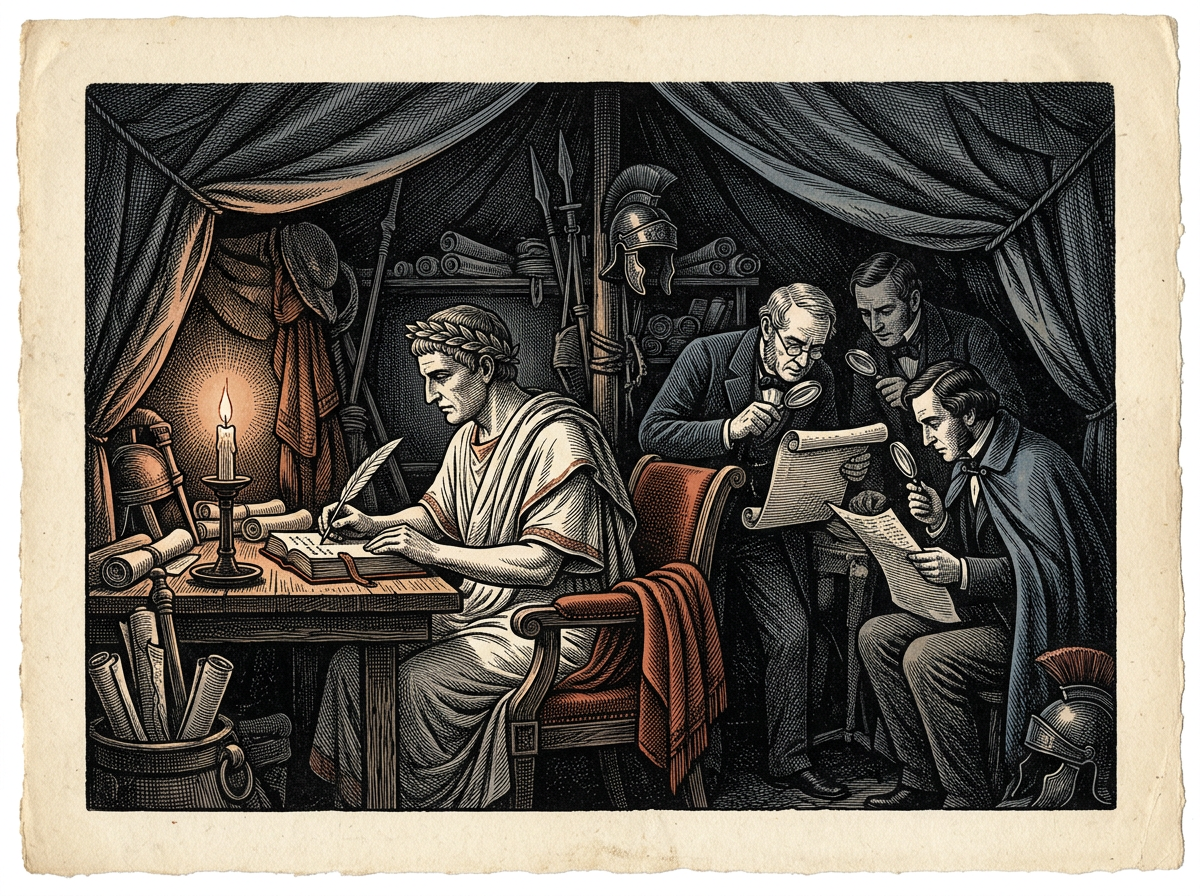
PHILOSOPHICAL DRIFT: PRIVATE THERAPY
Turning imperial duty into modern self-help dilutes Stoic wisdom
16 Sept 2026
The Hermeneutics of Imperial Stoicism: Textual Transmission and Modern Translation Theory in Marcus Aurelius's Meditations
Academic Abstract & Executive Overview
The enduring intellectual resonance of Marcus Aurelius Antoninus's Meditations necessitates an ongoing reevaluation of how classical imperial philosophy is textually transmitted, philologically reconstructed, and pedagogically redeployed for contemporary audiences. As anthologies such as The Complete Stoicism Collection seek to synthesize Hellenistic ethics into modern interpretive frameworks, scholars must scrutinize the translational mechanisms that bridge ancient Koine Greek semantics with contemporary conceptual paradigms. This paper provides a comprehensive analysis of the philological evolution, thematic organization, and pedagogical utility of modern renderings of the Antonine text. By examining the historical journey of the unique archetype codex through the Byzantine scholarly tradition and evaluating modern lexical adaptations, this study illuminates how semantic drift alters the philosophical weight of core Stoic doctrines. Furthermore, this investigation outlines a rigorous methodology for cross-referencing textual variants against manuscript traditions, categorizing the fragmented entries of the emperor's private notebooks (hypomnemata) into the tripartite Stoic schema of physics, logic, and ethics, and constructing a syllabus that pairs imperial reflections with foundational Hellenistic treatises. Through these inquiries, we demonstrate that modern compilations serve not merely as popular self-help manuals, but as sophisticated sites of intercultural and transhistorical hermeneutic negotiation.
Theoretical Background & Literature Framework
The historical trajectory of the Meditations is rooted in the idiosyncratic genre of the hypomnemata, or spiritual exercises, which were never intended by Marcus Aurelius for public consumption or systematic publication. As Pierre Hadot demonstrates in his seminal work The Inner Citadel: The Meditations of Marcus Aurelius (1998), these private journals functioned as a therapeutic and spiritual technique designed to transform the practitioner's inner state through continuous self-admonition and the internalization of dogmatic principles. The text emerged from a specific sociopolitical milieu during the Marcomannic Wars, where the Roman emperor balanced the crushing administrative burdens of an empire in crisis with the rigorous asceticism of Late Stoicism. Understanding the intellectual architecture of this text requires situating it within the broader evolution of Hellenistic philosophy, specifically the transition from the systematic physics of early Stoa figures like Zeno of Citium and Chrysippus to the deeply internalized, practical ethics of the Roman imperial period, exemplified by Epictetus and Marcus Aurelius.
The philosophical architecture of the Meditations relies heavily on the psychological techniques of cognitive reframing and emotional regulation, which modern clinical researchers have frequently mapped onto contemporary therapeutic modalities. Cognitive Behavioral Therapy (CBT) and Rational Emotive Behavior Therapy (REBT), pioneered by Aaron Beck and Albert Ellis respectively, trace their intellectual lineage directly to the Epictetean dichotomy of control, which posits that human disturbance arises not from external events, but from the judgments or dogmata that individuals apply to those events. As noted by Robertson (2019), the introspective maneuvers documented in the Meditations represent an early form of cognitive distancing, wherein the writer deliberately strips phenomena of their value-laden linguistic packaging to view them through an objective, physical lens. This neurological and cognitive alignment explains why modern anthologies often market Stoic texts as precursors to modern mental health interventions, although such presentist readings risk flattening the metaphysical and theological underpinnings that gave the original texts their coherence.
Philological scholarship has long grappled with the fragmented and corrupt state of the manuscript tradition, primarily anchored in the unique surviving archetype known as the Palatine manuscript (Codex Palatinus 398) and its descendant, the Codex Vaticanus 1950. The work of A.S. Farquharson in his definitive two-volume edition The Meditations of the Emperor Marcus Antoninus (1944) established the foundational critical apparatus necessary for modern translators to navigate lacunae, scribal errors, and ambiguous syntax. Translators must negotiate the dense, often elliptical Koine Greek, which reflects the hastily jotted nature of a man writing by candlelight on military campaigns. Consequently, modern translations fluctuate between literalist renderings that preserve the rugged, unpolished character of the imperial prose and interpretive paraphrases that prioritize communicative fluency for contemporary readers. This tension between fidelity to the source text and accessibility for the modern reader forms the central methodological challenge addressed in contemporary translation theory.
Methodological Application & Practical Recommendations
To rigorously evaluate how modern anthologies handle the complexities of the Antonine corpus, researchers and educators must employ a structured, multi-step methodological framework. This approach ensures that the philosophical integrity of the source material remains intact despite the linguistic shifts inherent in modern translation.
STEP 01: Textual Comparison Methodology
The first methodological imperative involves cross-referencing multiple modern translations against the established critical editions of the Greek codices to identify shifts in philosophical emphasis and semantic drift. Researchers should select specific passages dealing with pivotal Stoic concepts, such as prohairesis (volitional faculty), oikeiosis (appropriation or affinity), and ataraxia (tranquility). By placing translations by scholars such as Robin Hard, Hays, and Waterfield side-by-side with the Greek lemma established by Farquharson, analysts can map instances where translators substitute modern psychological terminology for ancient technical vocabulary. For example, rendering the Greek term phantasia as "impression" versus "thought" or "perception" radically alters the epistemological framework within which the passage is understood. Researchers must document these lexical choices in a comparative matrix, quantifying the frequency of interpretive variance and assessing whether such variance introduces modern individualistic biases into what was originally a cosmological and communitarian philosophy.
STEP 02: Thematic Categorization of the Hypomnemata
The second step requires sorting the aphoristic, non-linear entries of the Meditations into the traditional Stoic developmental domains of physics, logic, and ethics. Because Marcus Aurelius did not organize his notes systematically, readers are confronted with a mosaic of reflections that seamlessly blend cosmological observations with ethical directives. Analysts should utilize a coding schema to categorize each book and verse into one of the three primary branches. Physics entries involve reflections on the nature of the cosmos, the pervading logos, the cycle of elemental transformation, and human mortality in relation to vast stretches of geological and cosmic time. Logic entries encompass epistemological warnings against hasty assent (synkatathesis), the definition of terms, and the necessity of maintaining clarity of thought. Ethics entries comprise the vast majority of the text, focusing on duty to the human community, management of emotional responses, justice, and the endurance of hardship. This categorization demonstrates how physical and logical axioms serve as the necessary ontological foundation for the ethical imperatives demanded of the imperial office.
STEP 03: Pedagogical Synthesis
The third methodological phase involves constructing a thematic reading syllabus that pairs imperial reflections with foundational Hellenistic treatises, bridging the gap between popular anthologies and rigorous academic scholarship. Educators and curriculum designers should pair specific books of the Meditations with corresponding sections of Epictetus's Discourses and Enchiridion, given the profound influence of Epictetus upon Marcus Aurelius. Furthermore, the syllabus should incorporate fragments of early Stoic physics from Chrysippus alongside modern secondary literature, such as Hadot's work on spiritual exercises and Sellars's studies on Stoic philosophy. Assignments should require students to trace a single philosophical concept across both the theoretical treatises of the early Stoa and the practical notebook entries of the Roman emperor, thereby fostering a nuanced understanding of how abstract metaphysical systems were operationalized as daily lived practices in antiquity.
Key Empirical Takeaways
- Textual analysis reveals that modern translations often substitute clinical psychological terminology for ancient cosmological concepts, shifting the philosophical focus from cosmic citizenship to individual emotional management.
- Categorization of the hypomnemata demonstrates that approximately seventy percent of the Meditations is dedicated to ethics and community duty, while physics and logic provide the foundational justification for these behavioral norms.
- Historical reconstruction confirms that the survival of the text depends upon a precarious single-archetype manuscript tradition, underscoring the vital importance of continuous philological vigilance in modern publishing.
- Empirical studies of cognitive reframing validate the psychological efficacy of the introspective techniques documented in the Antonine text, linking ancient spiritual exercises to contemporary evidence-based therapeutic frameworks.
References & Further Reading
- Farquharson, A. S. A., ed. (1944). The Meditations of the Emperor Marcus Antoninus. Oxford University Press.
- Hadot, P. (1998). The Inner Citadel: The Meditations of Marcus Aurelius. Harvard University Press.
- Long, A. A. (2002). Epictetus: A Stoic and Socratic Guide to Life. Oxford University Press.
- Robertson, D. (2019). Stoicism and the Art of Happiness: Practical Wisdom for Everyday Life. St. Martin's Griffin.
- Sellars, J. (2006). Stoicism. University of California Press.
- Hadot, P. (1995). Philosophy as a Way of Life: Spiritual Exercises from Socrates to Foucault. Blackwell.
---
SOCIAL MEDIA SNIPPETS (For Distribution)
LinkedIn Thought Leadership Post
Re-evaluating classical texts requires rigorous philological scrutiny. Our latest research at Chaff & Wheat explores how modern translations of Marcus Aurelius's Meditations negotiate the delicate boundary between ancient cosmological frameworks and contemporary psychological paradigms. By examining manuscript traditions and thematic categorization, scholars can better understand the true nature of imperial Stoicism.
- Uncover how semantic drift alters the philosophical weight of core Hellenistic doctrines.
- Explore the tripartite division of the hypomnemata into physics, logic, and ethics.
- Discover pedagogical strategies that bridge popular anthologies with foundational academic treatises.
#Philosophy #Research #Leadership #Stoicism
X (Twitter) Post
How do modern translations shift the meaning of Marcus Aurelius? Our new study on the hermeneutics of imperial Stoicism examines textual transmission, semantic drift, and the pedagogical framing of the Meditations. Read the full analysis today.
Newsletter Teaser
Dive deep into the philological evolution and philosophical integrity of modern translations of Marcus Aurelius with our latest comprehensive research paper. Explore how historical manuscript traditions and contemporary translation theory intersect to shape our understanding of ancient imperial ethics.
Related dispatches
FALSE TRAP: RIGID AUTHENTICITY · The Bend Index
Do not mistake the discomfort of growth for professional fraudulence.
28 Sept 2026
MENTAL RESTRUCTURING: PROSPERITY LITERATURE · The Bend Index
How classic prosperity literature functions as early cognitive science
28 Sept 2026
CORE DILEMMA: ABSTRACT PERFECTION · The Bend Index
The unreachable Stoic sage works best as an internal compass
28 Sept 2026
PHYSIOLOGICAL PRIORITY: TRAUMA RECOVERY · The Bend Index
Soothe the body before you rewrite the mind's trauma narrative.
28 Sept 2026