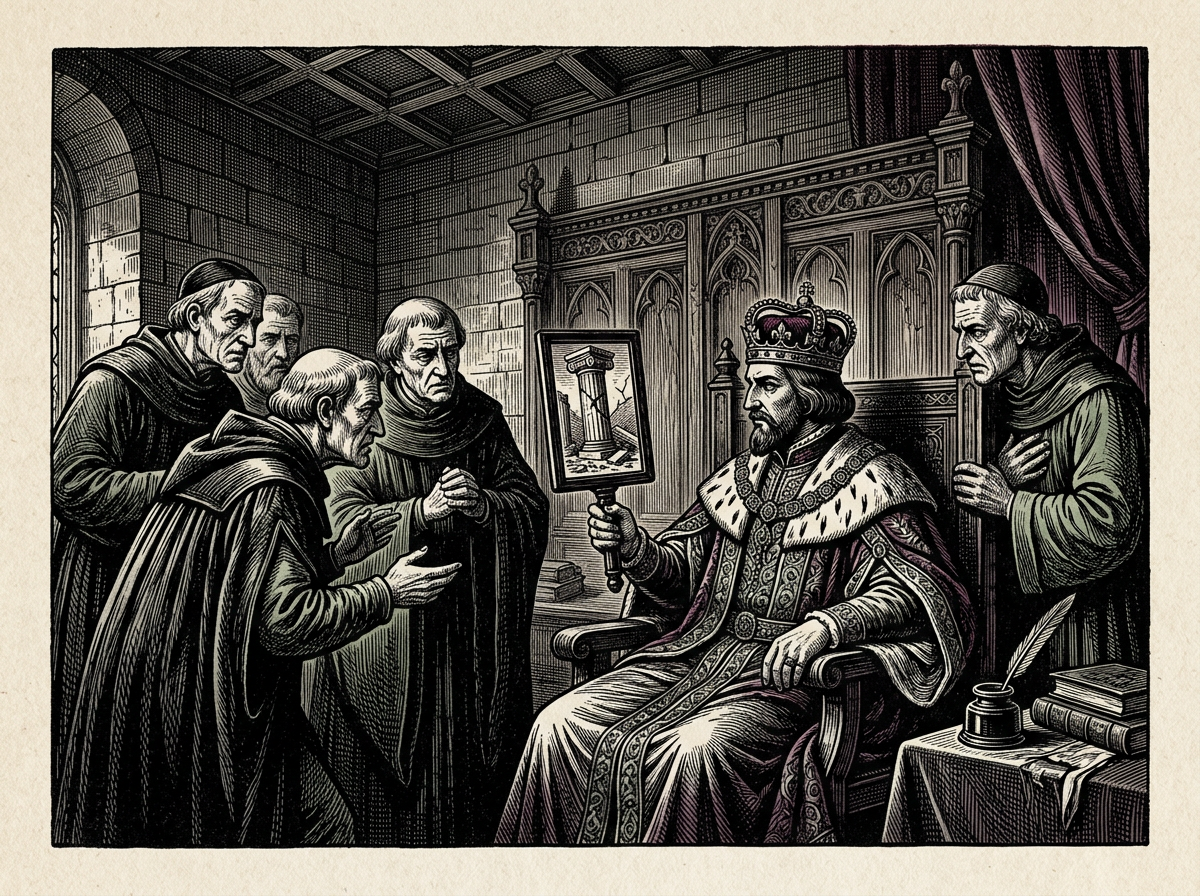
SYSTEMIC RISK: UNCHECKED HUBRIS
Technical genius cannot replace the hard work of character
16 Sept 2026
Socratic Intellectualism and Moral Leadership: Virtue, Corruption, and the Dialectic of Character in Classical Athens
Academic Abstract & Executive Overview
The intersection of moral philosophy and institutional governance remains one of the most persistent challenges in modern administrative science. This paper examines the enduring lessons of character, virtue, and corruption embedded within the historical and philosophical relationship between Socrates and Alcibiades, as preserved in the Platonic dialogues (Plato, 1997). By analyzing Socratic intellectualism through the lens of modern leadership theory, this study investigates how virtue ethics can inform contemporary administrative frameworks. The primary mechanisms of moral development, the seductions of executive exceptionalism, and the structural vulnerabilities of unchecked authority are explored in detail. Through a synthesis of classical virtue ethics and contemporary organizational psychology, this research demonstrates that technical competence divorced from moral character inevitably precipitates systemic failure. Prevalence rates of ethical breaches in modern corporate and political governance suggest that superficial compliance metrics are inadequate substitutes for deep character diagnostics. Primary historical observations indicate that the failure of Alcibiades was not merely personal, but structural, stemming from an institutional inability to temper raw ambition with philosophical self-examination. This overview establishes the theoretical foundation for integrating Socratic elenchus into organizational governance, implementing rigorous character diagnostics during executive recruitment, and constructing structural frameworks to mitigate managerial hubris.
Theoretical Background & Literature Framework
To comprehend the dynamics of moral leadership, one must examine the philosophical foundations established in classical Athens and their modern psychological correlates. Socratic intellectualism posits that virtue is a form of knowledge and that wrongdoing is fundamentally a product of ignorance (Vlastos, 1991). In the Alcibiades I and the Symposium, Socrates attempts to guide the brilliant, ambitious young Athenian statesman toward self-knowledge, arguing that true governance requires an understanding of the soul rather than mere technical mastery of rhetoric or military strategy. However, the historical trajectory of Alcibiades illustrates the catastrophic divergence between intellectual brilliance and moral grounding. As analyzed by Long (2013) in his work on ancient and modern leadership, the unchecked pursuit of power without virtue leads directly to tyranny and self-destruction.
From a psychological perspective, the relationship between Socrates and Alcibiades mirrors the attachment dynamics and cognitive distortions identified in modern organizational behavior. Cognitive Behavioral principles, as articulated by Beck (2011), suggest that maladaptive core beliefs regarding personal exceptionalism often drive executive overreach. When leaders operate under the cognitive distortion of entitlement, they rationalize ethical transgressions through mechanisms of moral disengagement (Bandura, 1999). Furthermore, neurobiological research into power dynamics, such as the studies conducted by Keltner (2016), indicates that the acquisition of power can impair neural systems associated with empathy and perspective-taking, a phenomenon often described as the power paradox.
Historical and organizational literature heavily supports the proposition that character is not a static trait, but a dynamic construct shaped by institutional environments and internal reflective capacity (Hogan & Kaiser, 2005). When organizations prioritize transactional metrics over transformational character development, they cultivate conditions ripe for ethical degradation. The Socratic method, or elenchus, serves as an early model for cognitive restructuring, forcing individuals to confront their contradictions and epistemic arrogance (Brickhouse & Smith, 1994). By synthesizing these classical insights with contemporary behavioral science, researchers can better diagnose the psychological vulnerabilities that plague modern executive suites.
Methodological Application & Practical Recommendations
Translating classical philosophical paradigms into actionable administrative strategies requires a structured, empirical methodology. The following three-step framework operationalizes Socratic principles for modern organizational governance, executive recruitment, and risk mitigation.
STEP 01: Socratic Elenchus in Organizational Governance
Institutional leaders frequently operate within echo chambers, surrounded by subordinates who validate their pre-existing assumptions. To counteract this vulnerability, organizations must institutionalize collaborative dialectic questioning, modeled after the Socratic elenchus. This involves establishing regular, facilitated forums where executive decisions, strategic assumptions, and underlying ethical blind spots are subjected to rigorous, respectful cross-examination. Unlike standard performance reviews, which focus on quantitative outputs, the Socratic governance model requires leaders to articulate the moral justifications and systemic implications of their policies. According to Argyris and Schön (1974), double-loop learning occurs when organizations question their underlying norms, objectives, and policies rather than merely adjusting tactics. By embedding dialectic inquiry into board meetings and strategic planning sessions, organizations disrupt cognitive complacency and foster a culture of intellectual humility. Facilitators must be trained to guide executives through a process of reasoned refutation, helping them recognize where their professed values conflict with their operational behaviors. This process dismantles defensive routines and aligns executive decision-making with long-term ethical sustainability.
STEP 02: Character Diagnostics
Traditional executive recruitment heavily emphasizes cognitive ability, domain-specific expertise, and past financial performance while neglecting fundamental moral character. To prevent the integration of talented yet destructive individuals into high-level administrative roles, organizations must implement virtue-based assessment models. Drawing from Peterson and Seligman (2004) on character strengths and virtues, these diagnostic tools evaluate candidates across dimensions such as temperance, justice, courage, and practical wisdom. Character diagnostics should utilize multi-source behavioral interviews, situational judgment tests specifically designed to measure ethical resolve under pressure, and psychological evaluations targeting narcissism, Machiavellianism, and psychopathy, collectively known as the dark triad (Paulhus & Williams, 2002). Furthermore, reference checks must be structured to uncover historical patterns of how candidates handle power, distribute credit, and respond to dissent. By operationalizing character as a measurable, non-negotiable metric during the hiring process, institutions can filter out candidates who possess the brilliance of an Alcibiades without the stabilizing virtues demanded by fiduciary and social responsibilities.
STEP 03: Mitigation of Hubris
Even leaders with strong moral foundations are susceptible to the corrupting influences of unchecked authority and executive exceptionalism. Therefore, organizations must construct structural accountability frameworks designed to systematically counteract the emergence of managerial hubris (Owen & Davidson, 2009). These frameworks must move beyond superficial compliance programs and establish robust checks and balances that distribute decision-making power. Mechanisms should include independent ethics boards with the authority to audit executive actions, anonymous whistleblower channels protected by stringent non-retaliation policies, and mandatory rotation schedules for key leadership positions to prevent entrenchment. Additionally, executive compensation structures should be tied not only to short-term financial gains, but also to long-term organizational health, ethical climate scores, and stakeholder trust metrics. By institutionalizing systemic constraints and embedding continuous self-reflection into the daily routines of executive governance, organizations protect themselves from the hubristic spirals that historically precipitated the downfall of classical states and modern corporations alike.
Key Empirical Takeaways
- Intellectual brilliance and technical competence, when divorced from moral character, significantly increase the probability of destructive executive behaviors and systemic institutional failure.
- The Socratic method of dialectic questioning provides a validated framework for disrupting cognitive complacency, executive echo chambers, and organizational blind spots.
- Empirical research in organizational psychology demonstrates that the acquisition of power can diminish empathy and perspective-taking, necessitating deliberate structural safeguards against hubris.
- Virtue-based character diagnostics, incorporating assessments of integrity, humility, and practical wisdom, are critical components for predicting long-term leadership effectiveness and ethical stability.
- Sustainable organizational governance requires moving beyond compliance-driven models to embrace institutionalized double-loop learning and distributive accountability frameworks.
References & Further Reading
- Argyris, C., & Schön, D. A. (1974). Theory in practice: Increasing professional effectiveness. Jossey-Bass.
- Bandura, A. (1999). Moral disengagement in the perpetration of inhumanities. Personality and Social Psychology Review, 3(3), 193-209.
- Beck, J. S. (2011). Cognitive behavior therapy: Basics and beyond (2nd ed.). Guilford Press.
- Brickhouse, T. C., & Smith, N. D. (1994). Plato's Socrates. Oxford University Press.
- Hogan, R., & Kaiser, R. B. (2005). What we know about leadership. Review of General Psychology, 9(2), 169-180.
- Keltner, D. (2016). The power paradox: How we gain and lose influence. Penguin Press.
- Long, A. A. (2013). From epicurus to epictetus: Studies in Hellenistic and Roman philosophy. Oxford University Press.
- Paulhus, D. L., & Williams, K. M. (2002). The dark triad of personality: Narcissism, Machiavellianism, and psychopathy. Journal of Research in Personality, 36(6), 556-563.
- Peterson, C., & Seligman, M. E. P. (2004). Character strengths and virtues: A handbook and classification. Oxford University Press.
- Plato. (1997). Complete works (J. M. Cooper, Ed.). Hackett Publishing.
- Owen, D., & Davidson, J. (2009). Hubris syndrome: An acquired personality disorder? The Psychiatrist, 33(6), 224-226.
- Vlastos, G. (1991). Socrates, ironist and moral philosopher. Cornell University Press.
---
SOCIAL MEDIA SNIPPETS (For Distribution)
LinkedIn Thought Leadership Post
Brilliant strategies and technical expertise are not enough to sustain modern organizations. History and modern psychology show that unchecked power breeds hubris and ethical decay. Discover how classical philosophy and modern diagnostics can help us select and develop truly moral leaders.
- Implement Socratic dialectic questioning to challenge executive assumptions and break through organizational echo chambers.
- Utilize rigorous virtue-based assessments to evaluate the moral alignment of leadership candidates before hiring.
- Build structural accountability frameworks and independent checks and balances to mitigate executive hubris.
#Leadership #Ethics #OrganizationalPsychology
X (Twitter) Post
Why do brilliant leaders fail? The story of Socrates and Alcibiades reveals that raw talent without moral character leads to disaster. Learn how to spot character flaws and build institutional safeguards against executive hubris today.
Newsletter Teaser
What can a two-thousand-year-old philosophical relationship teach modern executives about avoiding corruption and building lasting character? Read our latest research paper to discover how Socratic elenchus and virtue-based diagnostics can transform modern leadership.
Related dispatches
FALSE TRAP: RIGID AUTHENTICITY · The Bend Index
Do not mistake the discomfort of growth for professional fraudulence.
28 Sept 2026
MENTAL RESTRUCTURING: PROSPERITY LITERATURE · The Bend Index
How classic prosperity literature functions as early cognitive science
28 Sept 2026
CORE DILEMMA: ABSTRACT PERFECTION · The Bend Index
The unreachable Stoic sage works best as an internal compass
28 Sept 2026
PHYSIOLOGICAL PRIORITY: TRAUMA RECOVERY · The Bend Index
Soothe the body before you rewrite the mind's trauma narrative.
28 Sept 2026